✨ This article was AI edited. Editorial responsibility: Interconnect-Diabetes.eu.
Produced with AI. This article was artificially generated. Editorial responsibility: Interconnect-Diabetes.eu.
For individuals following low-carbohydrate, ketogenic, or diabetic meal plans, recreating the satisfying crunch of traditional fried foods, casseroles, and baked cutlets without wheat flour or breadcrumbs is a culinary challenge. Traditional panko and breadcrumbs deliver upwards of 75 grams of fast-acting starches per cup, prompting dramatic postprandial glucose spikes. Crushed pork rinds (pork panko or chicharrones) offer a revolutionary zero-carbohydrate culinary solution—providing high-heat crispiness, rich savory flavor, and complete glycemic stability. This comprehensive culinary and nutritional guide explores using pork rinds in diabetic cooking, detailing panko substitutes, crispy chicken cutlet recipes, casserole toppings, and continuous glucose monitoring data.
Culinary Highlights & Macronutrient Profile
- Zero Glycemic Impact: Pork rinds contain 0g carbohydrates, 0g sugar, and 0g dietary starch, producing a flat glycemic line on continuous glucose monitors.
- High-Heat Crispiness: Unlike almond flour or coconut flour which burn easily or absorb moisture into a soggy crust, pork rind collagen crisps into an authentic golden crunch.
- Collagen & Glycine Density: Pork rinds provide natural collagen peptides and glycine, an amino acid shown to support gut mucosal integrity and improve insulin response.
- Sodium Management: Choose unseasoned or artisanal low-sodium pork rinds if you are managing comorbid hypertension or renal considerations.
The Food Science of Pork Rind Panko vs. Traditional Breadcrumbs
Traditional breading relies on wheat gluten and gelatinized wheat starch to create a moisture barrier during frying. However, when breaded foods are digested, salivary and pancreatic amylase break down breadcrumbs in minutes, releasing a deluge of glucose into the bloodstream.
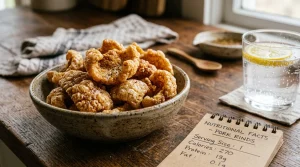
Crushed pork rinds consist entirely of dehydrated and fried pork skin (collagen and subcutaneous fat):
- Hydrophobic Lipid Barrier: The natural lipids in pork rind crumbs repel excess cooking oil absorption while sealing natural juices inside poultry, pork, or seafood.
- Maillard Reaction Without Sugars: The protein-dense matrix undergoes rapid Maillard browning at 350°F–375°F (175°C–190°C), producing a deep golden crust without added sugars or dextrose.
- Superior Binder Performance: When mixed with grated Parmesan cheese and egg wash, pork rind panko creates a cohesive coating that adheres tightly during air-frying, pan-searing, or deep-frying.
Macronutrient Comparison: Pork Panko vs. Standard Breading
| Breading Ingredient (1 Cup / ~60g) | Total Carbs | Net Impact Carbs | Protein Content | CGM Glycemic Peak |
|---|---|---|---|---|
| Pork Rind Panko Crumbs | 0.0 g | 0.0 g | 35.0 g | 0 mg/dL (Flat Baseline) |
| Almond Flour Breading | 12.0 g | 6.0 g | 24.0 g | Minimal / Flat |
| Traditional Japanese Panko | 44.0 g | 42.0 g | 7.0 g | +45 to +75 mg/dL Spike |
| Standard Italian Breadcrumbs | 48.0 g | 45.0 g | 8.0 g | +50 to +80 mg/dL Spike |
Recipe 1: Crispy Garlic-Herb Diabetic Chicken Cutlets
Golden, juicy chicken cutlets with a crunchy Parmesan and pork rind crust that rival high-end trattoria schnitzels.
Ingredients (Serves 4):
- 4 thin-cut pasture-raised chicken breast cutlets (approx. 1.25 lbs)
- 1.5 cups pork rinds, pulsed in a food processor to fine panko consistency
- 1/2 cup finely grated aged Parmigiano-Reggiano
- 1 tsp garlic powder & 1 tsp onion powder
- 1 tsp dried Italian oregano and thyme
- 1/2 tsp smoked paprika & 1/4 tsp black pepper
- 2 large eggs, beaten with 1 tbsp heavy cream
- 1/3 cup avocado oil or extra virgin olive oil for pan frying
Cooking Method:
- Pat chicken cutlets completely dry with paper towels. Season lightly with salt and pepper.
- In a shallow bowl, whisk eggs with heavy cream. In a second shallow bowl, combine pork rind crumbs, Parmesan, garlic powder, onion powder, Italian herbs, and paprika.
- Dip each chicken cutlet into the egg wash, allowing excess to drip off, then press firmly into the pork rind mixture on both sides until thoroughly coated.
- Heat avocado oil in a large cast-iron skillet over medium-high heat until shimmering (350°F / 175°C).
- Gently lay cutlets in the hot oil. Pan-fry for 3 to 4 minutes per side until golden brown and internal temperature reaches 165°F (74°C). Transfer to a wire rack to rest. Serve with fresh lemon wedges.
Recipe 2: Low-Carb Casserole & Mac-and-Cheese Topping
Sprinkle 1/2 cup crushed pork rinds mixed with 2 tbsp melted butter and 2 tbsp grated pecorino cheese over cauliflower gratin, green bean casseroles, or baked fish fillets during the last 5 minutes of baking for an authentic gratin crust.
Frequently Asked Questions (FAQ)
Are commercial flavored pork rinds safe for diabetics?
Always read the ingredient label. Plain and sea-salt varieties are almost always 0g carbs. However, “Barbecue,” “Sweet Chili,” and “Honey Mustard” flavored pork rinds frequently contain added maltodextrin, cane sugar, or MSG that add hidden carbohydrates.
Can pork rinds be used in an air fryer?
Yes. Air-frying at 390°F (200°C) for 10 to 12 minutes produces an exceptionally crispy, grease-free breading with zero mess and minimal added cooking oils.
Do pork rinds raise cholesterol or cardiovascular risk?
Pork fat (lard) consists of roughly 45% monounsaturated oleic acid (the same heart-healthy fat found in olive oil), 40% saturated stearic/palmitic acid, and 15% polyunsaturated fats. When consumed within a low-carbohydrate diet, it does not adversely affect lipid profiles or glycemic control in most individuals.
Get our latest guides, news, and insights highlighted in your Google Search & AI Overviews.