✨ This article was AI edited. Editorial responsibility: Interconnect-Diabetes.eu.
Produced with AI. This article was artificially generated. Editorial responsibility: Interconnect-Diabetes.eu.
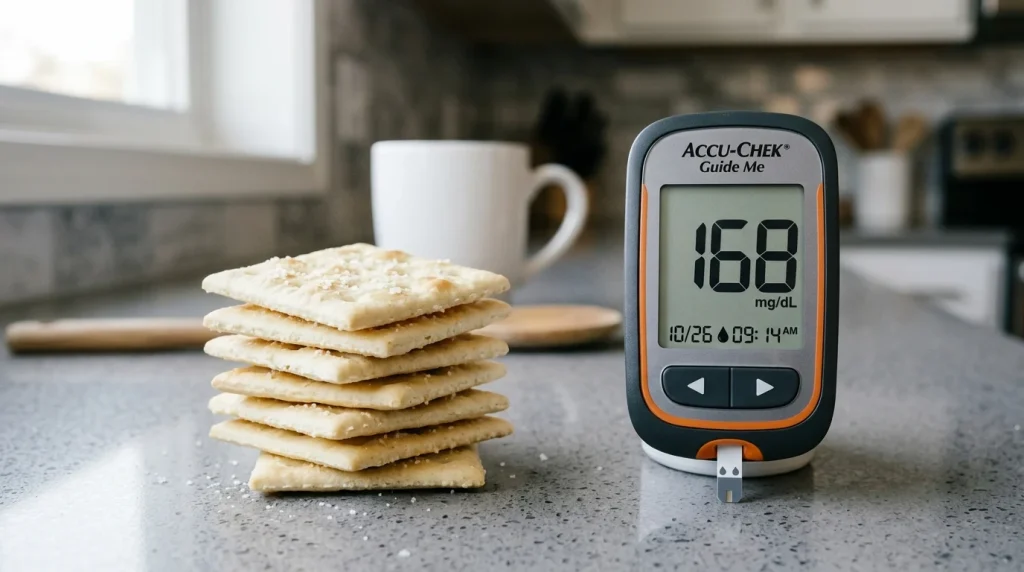
Saltine crackers are bad for diabetics due to their high glycemic index (GI 74) and refined white flour composition. A standard 5-cracker serving contains 11g to 13g of rapidly digestible starches with virtually zero fiber or protein, triggering steep postprandial glucose spikes and rapid insulin surges.
For generations, saltine crackers (soda crackers) have been regarded as the quintessential gentle, universal comfort food—routinely reached for during bouts of nausea, paired with bowls of chicken noodle soup, or kept in bedside tables as a bland snack. However, for individuals diagnosed with type 1, type 2, or gestational diabetes, saltine crackers represent an insidious metabolic trap.
Despite their plain appearance and mild, non-sweet taste profile, saltine crackers behave biochemically almost identically to pure table sugar once digested. Understanding the enzymatic breakdown of refined cracker starch, assessing the clinical glycemic trajectory, and discovering nutrient-dense low-glycemic alternatives are critical steps toward maintaining optimal long-term glycemic control.
Nutritional Breakdown: Why Saltine Crackers Spike Blood Glucose
To understand the physiological impact of saltines, one must look past their unassuming packaging and examine their core macronutrient specifications:
| Nutritional Parameter | Saltine Crackers (5 Crackers / ~15g) | Whole Wheat Crackers (5 Crackers / ~16g) | Almond Flour Crackers (15 Crackers / ~30g) | Chia & Flax Seed Crackers (4 Crackers / ~28g) |
|---|---|---|---|---|
| Calories | 60–70 kcal | 70 kcal | 150 kcal | 140 kcal |
| Total Carbohydrates | 12.0 g | 11.0 g | 16.0 g | 10.0 g |
| Dietary Fiber | 0.4 g | 2.0 g | 3.0 g | 8.0 g |
| Net Carbohydrates | 11.6 g | 9.0 g | 13.0 g | 2.0 g |
| Protein Content | 1.5 g | 2.0 g | 4.0 g | 5.0 g |
| Total Fat | 1.5 g | 2.5 g | 9.0 g (Healthy Fats) | 10.0 g (Omega-3s) |
| Glycemic Index (GI) | 74 (High) | 62 (Moderate) | <25 (Low) | <15 (Very Low) |
| Glycemic Load (GL) | 9 (High per portion) | 6 (Moderate) | 3 (Low) | 0.5 (Negligible) |
The Biochemistry of Starch Hydrolysis: From Cracker to Glucose
Why does a savory cracker cause such severe hyperglycemia? The answer lies in the molecular architecture of the primary ingredient: refined enriched white wheat flour.
During the industrial milling process, the fiber-dense bran and nutrient-rich germ are mechanically stripped away, leaving only pure endosperm packed with amylopectin. Amylopectin is a highly branched polysaccharide whose molecular bonds offer immense surface area for digestive enzymes.
As soon as a saltine cracker enters the mouth, salivary alpha-amylase immediately begins cleaving alpha-1,4-glucosidic bonds, converting starch molecules into maltose and dextrins before the cracker even reaches the stomach. Upon entering the duodenum and jejunum, pancreatic amylase and intestinal brush-border glucosidases complete the rapid conversion into free glucose.
Because saltines contain virtually no dietary fiber, fat, or protein to slow gastric emptying, this wave of free glucose floods the portal circulation within 15 to 30 minutes. In patients with type 2 diabetes, whose phase-1 insulin response is impaired, the resulting postprandial glucose spike regularly exceeds 180 to 220 mg/dL (10.0–12.2 mmol/L).
The False “Hypo Treatment” Myth
In decades past, patients were occasionally advised to consume saltine crackers with peanut butter to treat mild hypoglycemia (low blood sugar). Modern endocrinological consensus strictly advises against using crackers for acute hypoglycemia rescue:
- Follow the Rule of 15: When capillary blood glucose falls below 70 mg/dL (3.9 mmol/L), the patient requires 15 grams of fast-acting, pure simple carbohydrates (such as 4 glucose tablets or 4 ounces of fruit juice)—not complex starches or crackers.
- Variable Absorption Kinetics: Starch digestion in crackers can be delayed unpredictably by digestive enzymes or fat from spreads, leaving the patient symptomatic in a state of neuroglycopenic risk.
- Rebound Hyperglycemia: Overeating crackers out of intense hypoglycemic hunger frequently results in severe rebound hyperglycemia several hours later.
Superior Low-Glycemic Cracker Swaps for Diabetics
Diabetic patients do not have to abandon crunchy snacks entirely. By selecting crackers built upon whole nuts, seeds, and alternative flours, you achieve satisfying texture while preserving glycemic stability:
1. Seed-Based Artisan Crackers (Flax, Chia, Pumpkin, Sesame)
Crafted exclusively from whole seeds held together with psyllium husk or water, these crackers contain up to 8 grams of prebiotic soluble fiber per serving, resulting in a net carbohydrate count of less than 2 grams. Soluble fiber forms a viscous gel in the gut, blunting glucose absorption.
2. Almond Flour Crackers (Simple Mills & Artisan Brands)
Made with finely ground blanched almonds and cassava flour, these crackers provide monounsaturated fats, plant-based protein, and vitamin E, preventing sharp postprandial spikes when paired with cheese or hummus.
3. Dehydrated Cheese Crisps (Parmesan Crisps)
Composed of 100% baked aged cheese (such as Parmesan or Cheddar), cheese crisps deliver intense savory flavor with literally 0 grams of carbohydrates and high protein.
Navigating Illness and Gastrointestinal Distress Without Crackers
For decades, healthcare providers and parents relied on the classic BRAT diet (Bananas, Rice, Applesauce, Toast/Crackers) for managing viral gastroenteritis or nausea. For diabetic individuals, however, the BRAT protocol delivers a massive, unbuffered carbohydrate load that exacerbates dehydration through osmotic diuresis while failing to provide gut-reparative micronutrients.
When suffering from acute nausea or upset stomach, modern diabetic clinical nutrition recommends sipping warm bone broth, which provides bioavailable sodium, potassium, and glycine without disturbing blood glucose. Lightly salted pure electrolyte broths or unsweetened ginger infusions settle gastric mucosa far more effectively than refined wheat crackers without destabilizing glycemic equilibrium.
Frequently Asked Questions
How many saltines can a diabetic safely eat?
If consuming saltines, limit portion size to no more than 3 to 4 crackers (roughly 8–10g of carbohydrates), and always pair them with healthy fats and protein (such as cheddar cheese, guacamole, or canned tuna) to delay gastric absorption.
Are unsalted saltines better for diabetes than regular saltines?
Unsalted saltines reduce sodium intake, which is beneficial for managing hypertension and diabetic kidney disease, but they contain the exact same amount of refined starch and will cause the identical blood sugar spike as regular salted crackers.
Do whole wheat crackers spike blood sugar like saltines?
While 100% whole wheat crackers contain more dietary fiber and have a slightly lower glycemic index (GI 62 vs. 74), they still contain substantial carbohydrates (around 18g per serving) and will cause notable glucose elevations if eaten in large portions.
Get our latest guides, news, and insights highlighted in your Google Search & AI Overviews.