✨ This article was AI edited. Editorial responsibility: Interconnect-Diabetes.eu.
Produced with AI. This article was artificially generated. Editorial responsibility: Interconnect-Diabetes.eu.
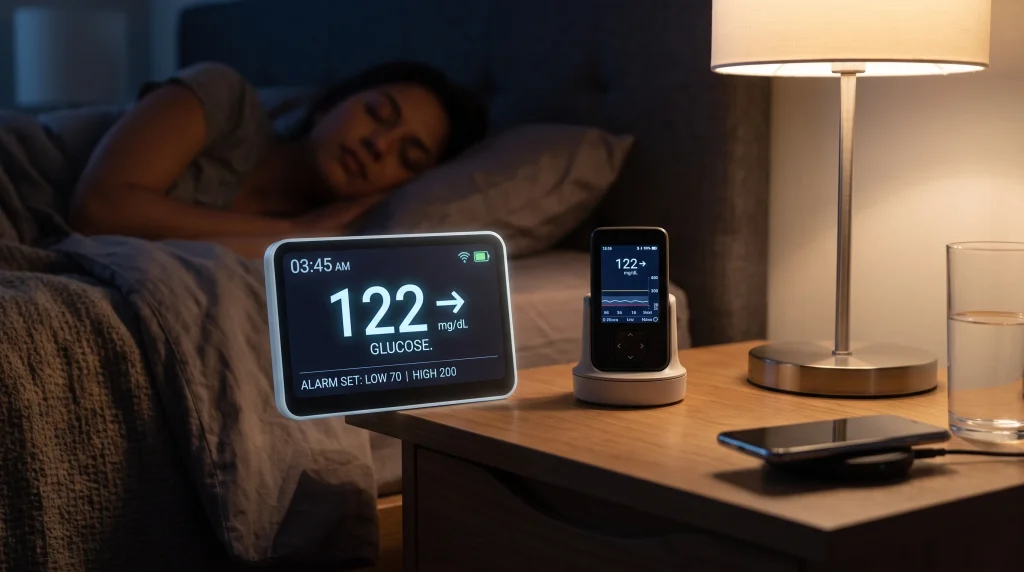
Nocturnal hypoglycemia—often called “the dead in bed syndrome” anxiety by parents and patients—is one of the most frightening aspects of living with Type 1 diabetes. Standard smartphone Continuous Glucose Monitoring (CGM) alerts frequently fail to awaken deep sleepers due to quiet notification sounds, Bluetooth dropouts, or “alarm fatigue.” Dedicated Type 1 diabetes alarm clocks, bedside LED glucose displays, and secondary alert sirens provide fail-safe nighttime monitoring, loud audible waking alarms, and real-time glycemic trends to protect patients while they sleep.
Clinical Highlights & Nighttime Safety Essentials
- The Danger of Nocturnal Hypoglycemia: Up to 50% of severe hypoglycemic events occur during sleep when counter-regulatory adrenaline and cortisol responses are blunted.
- Alarm Fatigue & Smartphone Limitations: Smartphone speakers often fail to penetrate deep REM sleep or sleep apnea, leading to dangerous unnoticed low glucose episodes.
- Dedicated Hardware Displays: Standalone nightstand devices like the SugarPixel, Nightscout bedside tablets, and bed-shaker receivers pull data directly from Dexcom, Freestyle Libre, or Nightscout cloud APIs.
- Multi-Sensory Alert Systems: High-decibel sirens (up to 95+ dB), high-intensity flashing LED lights, and under-pillow vibrating bed shakers ensure waking even for the deepest sleepers.
The Clinical Physiology of Nocturnal Hypoglycemia
During sleep, the human brain relies entirely on a continuous supply of circulating blood glucose. In healthy individuals, falling glucose levels trigger autonomic responses that release epinephrine, glucagon, and growth hormone, waking the individual. In long-standing Type 1 diabetes, however, the glucagon response to hypoglycemia is completely lost, and hypoglycemia-associated autonomic failure (HAAF) blunts sympathetic warning symptoms.
Consequently, individuals can sleep through profound hypoglycemia (<45 mg/dL / 2.5 mmol/L), increasing the risk of seizures, cardiac arrhythmias (specifically QT interval prolongation), and cognitive trauma. Establishing robust nocturnal alarm hardware is a vital clinical safeguard.
Top Type 1 Diabetes Alarm Clocks & Nightstand Displays Reviewed
| Device / System | Display Type | Alert Mechanisms | Supported CGM Sources |
|---|---|---|---|
| SugarPixel (CustomMadeBetter) | Retro pixel-art large color LED matrix | Customizable audio sirens, pulsing multi-color LEDs, dual vibrating puck ports | Dexcom G6/G7/ONE, Freestyle Libre 2/3, Nightscout |
| Dedicated Nightscout Bedside Display | 7-inch to 10-inch Android/Fire tablet | Full Ambulatory Glucose Profile graph, customizable browser siren alarms | Nightscout, Dexcom Share, Medtronic CareLink |
| M5Stack / ESP32 DIY Glucose Clock | 2-inch LCD / e-Ink micro-display | Onboard buzzer, RGB LED indicator bar | Dexcom Share API, Nightscout, XDrip+ |
| Heavy-Sleeper Bed Shaker Receiver | Physical vibrating puck under mattress | High-intensity mechanical vibration puck (no sound necessary) | Pairs with SugarPixel or specialized alarm units |
Key Features to Look For in a Diabetes Alarm Clock
1. High-Contrast, Glare-Free Nighttime Display
Opening your eyes in the middle of the night to check blood glucose shouldn’t blind you with excessive blue light. The best diabetes alarm clocks feature ambient light sensors that automatically dim during darkness, displaying blood glucose values in large, soft red or amber digits that can be read from across the room without reaching for glasses.
2. Dual Vibration Puck Integration
For heavy sleepers, children with T1D, or parents monitoring a child in a separate bedroom, sound alone is often inadequate. Heavy-duty vibrating discs placed beneath the pillow or mattress pad provide an unmistakable physical awakening signal the instant glucose drops below user-defined safety thresholds.
3. Real-Time Trend Arrows & Velocity Alerts
A reading of 80 mg/dL (4.4 mmol/L) with a flat arrow is stable; the same 80 mg/dL with double-down arrows indicates a precipitous glucose crash that will reach dangerous levels within 15 minutes. Advanced diabetes alarm clocks display trend velocity icons and alert on rapid rate-of-fall before severe hypoglycemia occurs.
Setting Up Fail-Safe Redundant Alarm Protocols
To eliminate single points of failure (dead phone batteries, Wi-Fi router dropouts, silent mode overrides), clinical diabetes educators recommend a 3-layer nocturnal defense strategy:
- Primary Layer (Wearable Device): CGM sensor communicating directly with insulin pump / smartphone via Bluetooth.
- Secondary Layer (Nightstand Hardware): Dedicated Wi-Fi bedside display (SugarPixel or Nightscout) drawing real-time data from cloud servers.
- Tertiary Layer (Caregiver Follower Device): Remote alerts enabled on a partner’s or parent’s smartphone with emergency breakthrough ringtones that bypass “Do Not Disturb” settings.
Frequently Asked Questions (FAQ)
Can a diabetes alarm clock work without Wi-Fi?
Most commercial bedside displays (like SugarPixel) rely on Wi-Fi to fetch real-time cloud data from Dexcom Share or Nightscout. However, Bluetooth-direct bridge devices (such as xDrip+ paired with local ESP32 units) can function purely over local Bluetooth without an active internet connection.
How loud are dedicated diabetes alarms compared to smartphones?
Standard smartphones output maximum alarm volumes between 70 and 80 dB. Dedicated units like the SugarPixel or external siren accessories can reach 95 to 105 dB—comparable to a smoke detector—ensuring waking even for deep sleepers or individuals taking sedating medications.
Is the SugarPixel covered by medical insurance or HSA/FSA?
Yes, many patients successfully purchase the SugarPixel using Health Savings Accounts (HSA) or Flexible Spending Accounts (FSA) as a qualified medical monitoring device, and some commercial insurers provide partial reimbursement when submitted with a Letter of Medical Necessity (LMN) from an endocrinologist.
Get our latest guides, news, and insights highlighted in your Google Search & AI Overviews.