✨ This article was AI edited. Editorial responsibility: Interconnect-Diabetes.eu.
Produced with AI. This article was artificially generated. Editorial responsibility: Interconnect-Diabetes.eu.
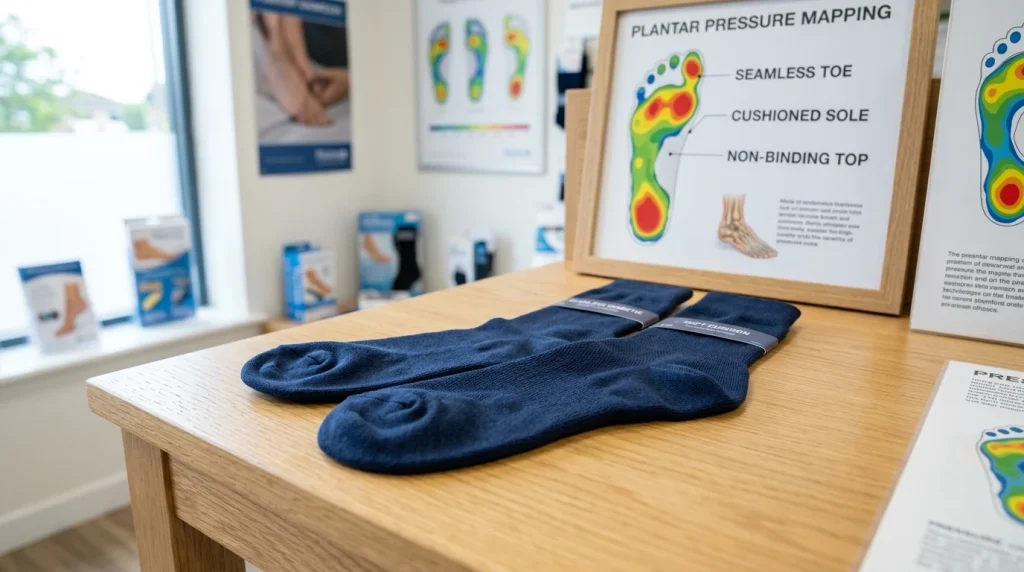
The diabetic socks market (internationally analyzed including the Japanese 糖尿病患者向け靴下市場) encompasses medical-grade therapeutic hosiery engineered without elastic binding bands, featuring seamless toe closures, moisture-wicking fibers, and antimicrobial silver threading to protect neuropathic feet from friction blisters, ischemic constriction, and ulcerations.
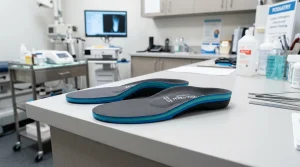
Diabetic peripheral neuropathy and peripheral arterial disease (PAD) are silent complications that transform everyday footwear into serious hazards. While considerable clinical attention focuses on therapeutic orthopedic shoes and custom-molded orthotic insoles, the direct interface between human skin and footwear—the sock—plays an equally decisive role in lower-extremity limb salvage. A single coarse seam or tight elastic ribbing band can trigger localized tissue ischemia, cutaneous necrosis, and intractable diabetic foot ulcers within hours.
As the global prevalence of diabetes escalates toward a projected 783 million individuals by 2045, the therapeutic hosiery sector has evolved from a niche medical supply segment into an advanced, multi-billion-dollar global industry. Understanding key clinical design standards, fiber technologies, and international podiatric guidelines allows patients and clinicians to select truly protective hosiery.
Clinical Engineering: Anatomical Anatomy of True Diabetic Socks
Unlike standard commercial dress or athletic socks—which prioritize elasticity, tight ankle retention, and cost-effective sewing—certified diabetic socks must fulfill strict bioengineering criteria established by the International Working Group on the Diabetic Foot (IWGDF) and podiatric orthopedic boards:
| Design Feature | Standard Commercial Socks | Medical-Grade Diabetic Socks | Biomechanical & Physiological Benefit |
|---|---|---|---|
| Cuff & Top Band | Tight elastic constriction band to prevent slipping | Non-binding, cross-stretch circular knit | Eliminates the “tourniquet effect”; preserves unobstructed venous and arterial microcirculation |
| Toe Closure | Raised, bulky machine-sewn seam across the dorsal toes | 100% hand-linked seamless or flat-knit closure | Prevents friction, shear stress, and blistering over vulnerable dorsal interphalangeal joints |
| Plantar Cushioning | Uniform thin fabric or localized heel pad | Graduated high-density terry loop padding beneath metatarsals and calcaneus | Dampens vertical kinetic impact forces; cushions atrophied plantar fat pads |
| Fiber Composition | 100% cotton or pure polyester | Thermo-regulating bamboo, Merino wool, or CoolMax with antimicrobial silver | Rapid moisture wicking; maintains dry microclimate; inhibits fungal and bacterial pathogens |
| Fit & Conformance | One-size-fits-most with high elastane tension | Anatomically contoured left/right options with wrinkle-free stretch | Prevents bunching and folding inside shoe toe boxes, eliminating localized pressure sores |
The Global Market Evolution: From White Tube Socks to High-Tech Textiles
Historically, patients were simply advised to purchase plain white, loose-fitting cotton athletic socks. The global market (including key developments across North America, Europe, and the Japanese 糖尿病患者向け靴下市場) has undergone radical structural transformations driven by smart textile engineering:
1. Bamboo Viscose & Natural Cellulose Polymers
Derived from sustainable bamboo pulp, bamboo viscose fibers feature micro-gaps and hollow cross-sections that wick moisture away from the stratum corneum up to four times faster than conventional cotton. Bamboo fabric possesses inherent bacteriostatic properties, essential for reducing bacterial loads in feet prone to maceration and diabetic tinea pedis.
2. Pure Silver Thread Integration (X-STATIC Technology)
Incorporating pure elemental silver permanently bonded to textile polymers provides continuous antimicrobial protection against a broad spectrum of pathogens, including Staphylococcus aureus and Pseudomonas aeruginosa. Furthermore, silver’s exceptional thermal conductivity helps regulate skin microtemperature, promoting consistent peripheral vasodilation.
3. Smart Continuous Dermal Sensing Textiles
Emerging medical innovations feature embedded micro-thermistor arrays that continuously monitor localized plantar temperatures via Bluetooth connectivity. Clinical trials show that detecting a 2.2°C temperature elevation between contralateral feet precedes cutaneous ulceration by up to a week, allowing proactive clinical intervention before skin breakdown occurs.
Why Color Selection Matters: The White Sole Clinical Mandate
Podiatrists and wound care specialists universally recommend that diabetic individuals wear socks with white or light-colored soles, even when the sock cuff is dyed black or navy for professional attire. Because diabetic sensory neuropathy completely eliminates the pain warning system, a patient may walk on an open, draining blister for days without feeling discomfort. A white sole immediately reveals telltale spots of serosanguinous fluid, blood, or exudate during daily end-of-day shoe removal, alerting the patient to seek medical care immediately.
Step-by-Step Patient Guide: How to Select the Right Pair
- Confirm Zero Elastic Constriction: Gently insert your hand into the top band; it should stretch easily and rest flat against the calf without leaving a deep indentation or red circumferential mark after removal.
- Perform the Inside-Out Tactile Test: Turn the sock completely inside out and run your fingers across the toe box. It must feel completely smooth without any ridge or thread knot.
- Ensure Adequate Footwear Volume: Padded diabetic socks occupy slightly more volume inside the shoe. Ensure your shoes have sufficient depth to prevent crowding the toes against the upper leather.
Economic Burden and Preventative Healthcare Impact
From a health economics standpoint, diabetic foot complications represent one of the most substantial financial strains on global healthcare infrastructures. The cost of managing a complex, infected diabetic foot ulcer exceeds twenty thousand dollars, escalating to over sixty thousand dollars when surgical debridement, revascularization, or partial foot amputation is required. In comparison, supplying high-risk diabetic patients with certified, medical-grade therapeutic socks costs a trivial fraction of these acute intervention expenses.
Comprehensive health economic analyses consistently demonstrate that multi-disciplinary preventative foot care programs—combining patient education, daily self-inspection, regular podiatric exams, and therapeutic footwear including non-binding seamless hosiery—reduce diabetic ulcer recurrence rates by up to sixty percent. Health ministries and insurance providers worldwide are increasingly recognizing the cost-effectiveness of reimbursing preventative therapeutic textiles to curb soaring hospitalization rates.
Frequently Asked Questions
Are compression socks the same as diabetic socks?
No. Standard compression socks utilize graduated tightness (15–30 mmHg) to squeeze the lower leg, which can be dangerous for patients with severe Peripheral Arterial Disease (PAD) by further compromising arterial inflow. Diabetic socks are non-binding and designed specifically to avoid constriction.
How often should diabetic socks be replaced?
Diabetic socks should be replaced every 6 to 12 months. Over time, repeated washing breaks down terry loop cushioning and fiber elasticity, causing the fabric to stiffen and increasing friction against the skin.
Can diabetic socks be washed in a regular washing machine?
Yes, but wash them in warm (not hot) water with mild detergent, avoiding bleach or fabric softeners that coat fibers and impair moisture-wicking capabilities. Tumble dry on low heat to preserve fiber integrity.
Get our latest guides, news, and insights highlighted in your Google Search & AI Overviews.