✨ This article was AI edited. Editorial responsibility: Interconnect-Diabetes.eu.
Produced with AI. This article was artificially generated. Editorial responsibility: Interconnect-Diabetes.eu.
Continuous subcutaneous insulin infusion (CSII) therapy via insulin pumps relies on precision catheter delivery systems known as infusion sets. For individuals living with Type 1 or insulin-requiring Type 2 diabetes, the catheter cannula is the vital bridge delivering rapid-acting insulin into the subcutaneous adipose layer 24 hours a day. Mastering infusion set selection, cannula insertion angles, site rotation protocols, and troubleshooting occlusion alerts is fundamental to avoiding unexplained hyperglycemia, lipohypertrophy, and life-threatening diabetic ketoacidosis (DKA).
Clinical Highlights & Essential Takeaways
- Cannula Material Typology: Soft flexible Teflon/polyurethane cannulas are standard for most patients, whereas 90-degree straight stainless steel needles are critical for individuals with Teflon allergies, frequent bent cannulas, or pregnancy.
- Infusion Set Wear Time Limits: Standard subcutaneous infusion sets must be replaced every 48 to 72 hours (2 to 3 days) to prevent insulin degradation, tissue inflammation, and lipodystrophy. Extended-wear infusion sets (e.g., Medtronic Medtronic Extended) offer up to 7-day durability with specialized materials.
- Silent Occlusions & DKA Risk: Because pump users do not have long-acting basal insulin depots in their bloodstream, a kinked catheter cannula can cause complete insulin deprivation and clinical DKA within 4 to 6 hours.
- Sterile Insertion Hygiene: Proper skin preparation with chlorhexidine or isopropyl alcohol and barrier wipes reduces the incidence of site-related Staphylococcus skin infections.
Anatomy of an Insulin Pump Infusion Set (Diabetes Catheter)
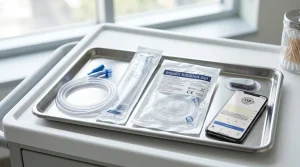
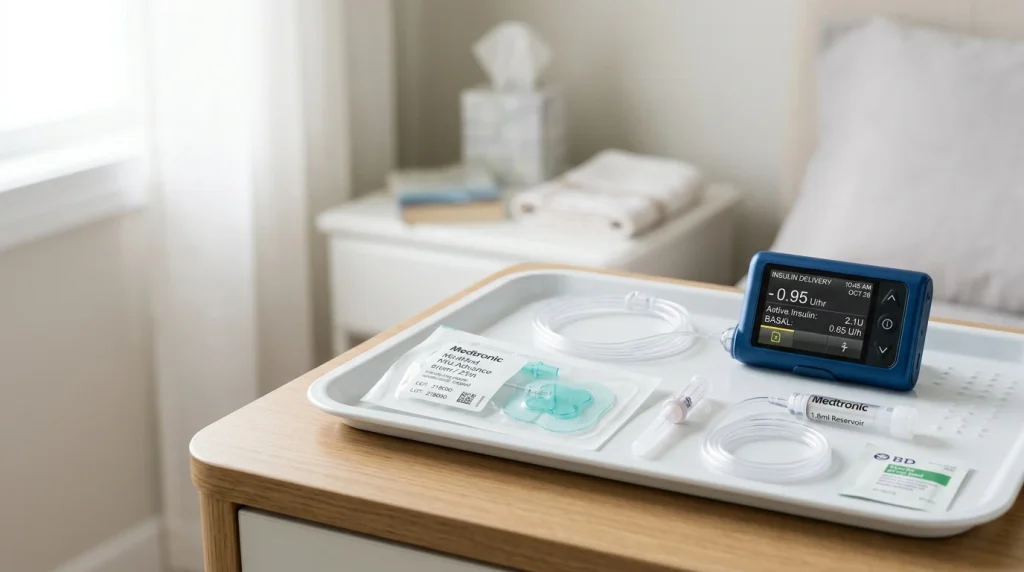
An insulin pump catheter delivery system consists of four precision-engineered components:
- Luer-Lock or Proprietary Reservoir Connector: Securely locks the fluid tubing onto the insulin cartridge or reservoir housing within the pump.
- Micro-Bore Flexible Tubing: Non-kinking medical-grade polyethylene tubing (typically available in 23-inch, 32-inch, or 43-inch lengths) that transports insulin from the pump to the body.
- Subcutaneous Cannula: The microscopic tube inserted into the fatty tissue. Cannulas vary by insertion angle (90-degree straight vs. 30-to-45-degree angled) and material (flexible Teflon vs. surgical stainless steel).
- Adhesive Dressing Patch: Breathable, hypoallergenic medical-grade adhesive tape that anchors the catheter hub firmly to the epidermal surface during movement, sweat, and showering.
Comparison: Subcutaneous Catheter Cannula Types
| Cannula Type & Angle | Material | Best Clinical Indication | Key Advantages / Limitations |
|---|---|---|---|
| 90-Degree Straight Soft Cannula | Flexible Teflon / Polyurethane | General adult and pediatric population with adequate subcutaneous adipose depth | High comfort; inserted via spring-loaded auto-inserter; small risk of cannula crimping or bending upon insertion |
| 30-Degree to 45-Degree Angled Cannula | Flexible Teflon (13mm or 17mm) | Lean individuals, competitive athletes, muscular builds, and pregnancy | Prevents intramuscular penetration; can be visually inspected through clear window; manual or assisted insertion |
| 90-Degree Steel Needle Cannula | Surgical Stainless Steel (6mm to 10mm) | Patients with Teflon allergies, history of bent cannulas, or active scarring | Zero risk of cannula kinking; dual-adhesive anchor patches prevent needle movement; requires 48-hour site changes |
| Extended-Wear 7-Day Infusion Set | Advanced biocompatible polymer | Patients seeking reduced plastic waste and fewer site changes | Reduces site change frequency from 120/year to ~52/year; preserves subcutaneous infusion tissue |
Infusion Site Rotation Biomechanics & Lipohypertrophy Prevention
Repeated insulin infusion into the same anatomical area triggers lipohypertrophy—a dense, rubbery accumulation of fibrous adipose tissue caused by the local lipogenic anabolic actions of insulin. Infusing into lipohypertrophic lesions causes erratic, delayed insulin absorption, severe unexplained glucose spikes, and sudden late hypoglycemia.
Recommended Anatomical Insertion Zones:
- Abdomen: 2 inches away from the navel, avoiding belt lines, scars, and stretch marks. Rapid, predictable absorption rate.
- Upper Outer Buttocks & Hips: Excellent subcutaneous depth, lower risk of dislodgement during sports, highly recommended for pediatric patients.
- Anterior & Lateral Thighs: Convenient access; ensure 30-degree angled sets are used if thigh musculature is prominent.
- Posterior Upper Arms: Suitable for individuals with adequate adipose tissue; requires extra care when dressing to avoid snagging tubing.
Clinical Troubleshooting: Managing Catheter Occlusions & Failures
When an insulin pump sounds an “Occlusion Detected” alarm or when blood sugar remains stubbornly above 250 mg/dL (13.9 mmol/L) despite corrective boluses, follow this strict clinical algorithm:
- Check for Ketones Immediately: Use blood or urine ketone strips. The presence of moderate-to-large ketones indicates systemic insulin deprivation requiring immediate subcutaneous injection via syringe or pen.
- Inspect the Infusion Site: Look for redness, swelling, tenderness, blood in the tubing, or the distinct medicinal smell of leaking insulin.
- Perform a Manual Correction via Pen/Syringe: Never attempt to troubleshoot unexplained severe hyperglycemia solely through the same suspicious pump catheter.
- Remove & Replace the Infusion Set: Discard the old catheter cannula. Inspect the removed Teflon tube under good light—a crimped “accordion” fold indicates the cannula was bent beneath the skin.
- Prime a New Reservoir & Tubing: Ensure all air bubbles are expelled from the cartridge before inserting a new catheter into a fresh, unscarred anatomical quadrant.
Frequently Asked Questions (FAQ)
Why do insulin pump catheters bend under the skin?
Cannula bending (kinking) can occur when inserting into scar tissue, hitting muscle fascia, or when manual inserters are withdrawn at an awkward angle. If you experience recurrent bent cannulas, consult your endocrinologist about transitioning to stainless steel cannulas or angled 30-degree insertion sets.
How often should diabetes infusion set catheters be changed?
Standard Teflon and steel infusion sets must be replaced every 48 to 72 hours (2 to 3 days). Leaving catheters in place longer increases the risk of subcutaneous abscesses, insulin crystallization, and site-induced insulin resistance.
Can diabetes catheters cause urinary or bladder infections?
Insulin pump infusion catheters are purely subcutaneous delivery devices that enter adipose tissue, not the urinary tract. However, individuals with diabetes who require urinary catheters (Foley catheters for diabetic neuropathy-induced neurogenic bladder) have an elevated risk of catheter-associated urinary tract infections (CAUTIs) due to glycosuria and impaired immune response, requiring rigorous sterile care.
Get our latest guides, news, and insights highlighted in your Google Search & AI Overviews.