✨ This article was AI edited. Editorial responsibility: Interconnect-Diabetes.eu.
Produced with AI. This article was artificially generated. Editorial responsibility: Interconnect-Diabetes.eu.
Living with diabetes while following a ketogenic or Atkins-style low-carbohydrate nutritional plan requires meticulous attention to macronutrients, glycemic index, and ingredient purity. For pet parents managing blood glucose, a common question arises: can you prepare Atkins-style low-carb meals that support tight diabetic management and can be safely shared in small portions with dogs and cats?
Quick Summary & Clinical Highlights
- Zero-Glycemic Whole Proteins: Unseasoned roasted chicken breast, baked wild salmon, and lean turkey offer pure protein that stabilizes human blood sugar while providing essential amino acids for companion animals.
- Critical Pet Toxicity Warnings: Never use onions, garlic, shallots, chives, cooked bones, xylitol (birch bark extract / birch sugar), macadamia nuts, or high-sodium marinades.
- Vegetable Safety Profiles: Steamed broccoli florets, zucchini slices, green beans, and cauliflower puree are excellent low-glycemic fiber sources for diabetics and safe pet treats.
- Ketosis vs. Diabetic Ketoacidosis (DKA): Nutritional ketosis in humans and carnivore biology in pets must be clearly distinguished from pathological ketoacidosis.
The Science of Low-Carb Nutrition for Diabetics and Carnivorous Pets
The core philosophy of the Atkins diet is reducing carbohydrate intake to shift the human metabolism toward fat oxidation and stable postprandial glucose levels. For individuals diagnosed with Type 1 or Type 2 diabetes, removing refined sugars, high-glycemic starches, and processed carbohydrates prevents dangerous glycemic variability and reduces insulin demand.
From an evolutionary perspective, domestic dogs (facultative carnivores) and domestic cats (obligate carnivores) have digestive physiology adapted to high-protein, moderate-to-high fat, and low-carbohydrate diets. When preparing whole-food low-carb meals, pet owners can synchronize kitchen prep by reserving plain protein and vegetable portions before adding human-specific seasonings and spices.
High-Risk Ingredients: What Diabetics Can Eat but Pets Cannot
While low-carb meals share many whole-food foundations, several diabetic pantry staples are severely toxic to companion animals. Absolute separation is required for the following ingredients:
| Ingredient | Diabetic Benefit | Pet Toxicity Risk | Safe Protocol |
|---|---|---|---|
| Garlic & Onions (Allium family) | Flavor without carbs; contains allicin | Causes oxidative damage to red blood cells, hemolytic anemia | Add garlic/onion powders only to human portions after cooking |
| Xylitol / Birch Sugar | Zero-glycemic sugar alcohol sweetener | Lethal hypoglycemia and acute hepatic necrosis in dogs | Strictly forbidden in multi-pet households; use stevia or monk fruit |
| Cooked Poultry / Fish Bones | Bone broths provide collagen & minerals | Brittle splintering causes esophageal or gastrointestinal perforation | Always debone thoroughly before offering meat to pets |
| Grapes & Raisins | Small portion snack (limited for diabetics) | Acute irreversible renal failure in dogs | Completely eliminate from shared prep areas |
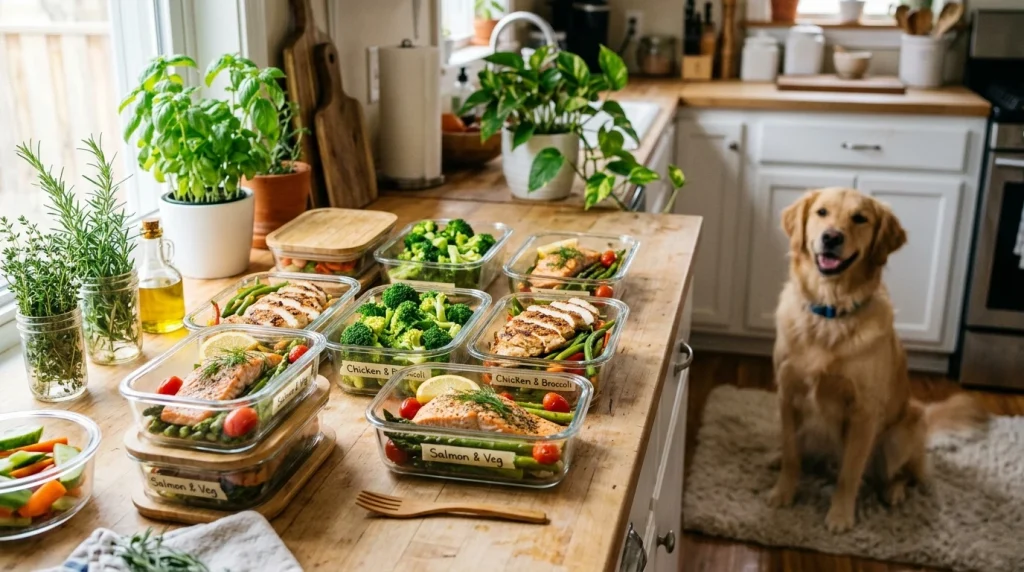
Recipe 1: Poached Herb Salmon with Steamed Asparagus & Zucchini Ribbons
Wild-caught salmon is packed with anti-inflammatory omega-3 fatty acids (EPA and DHA), which improve endothelial function and lipid profiles in individuals with diabetes while nourishing canine and feline coat health.
Ingredients:
- 2 wild salmon fillets (6 oz each, skin-on, pin bones removed)
- 1 bundle fresh asparagus spears (woody ends trimmed)
- 2 medium green zucchinis (shaved into ribbons)
- 2 tbsp extra-virgin olive oil
- 1 fresh lemon (for human portion only)
- Fresh dill and sea salt (for human portion only)
Preparation Steps:
- Gently steam or simmer the salmon fillets in plain, unseasoned water or low-sodium bone broth for 8 minutes until flaky.
- Steam the asparagus and zucchini ribbons for 3 to 4 minutes until tender-crisp.
- Pet Portion: Flake 1 to 2 tablespoons of warm, unseasoned salmon (ensure zero bones) and top with a few bites of soft zucchini ribbons into your pet’s bowl.
- Diabetic Plate: Drizzle remaining salmon and vegetables with extra-virgin olive oil, fresh lemon juice, sea salt, cracked black pepper, and chopped fresh dill. Serve immediately.
Recipe 2: Herb-Roasted Turkey & Cauliflower Mash Skillet
Lean poultry is a cornerstone of phase 1 Atkins and ketogenic protocols, delivering high satiety without disturbing blood sugar levels.
Ingredients:
- 1 lb lean ground turkey breast (93% or 99% lean)
- 1 large head cauliflower (steamed and mashed)
- 1 cup steamed chopped green beans
- 1 tbsp olive oil or unsalted pasture-raised butter
- Ground rosemary, cracked black pepper, sea salt (for human seasoning)
Preparation Steps:
- Brown the ground turkey in a non-stick skillet with 1 tsp olive oil over medium heat. Do not add seasonings.
- Steam cauliflower florets until fork-tender, then blend or mash into a smooth, creamy puree.
- Pet Portion: Combine 2 tablespoons of cooked lean turkey with 1 tablespoon of cauliflower mash and steamed green beans as a healthy topper.
- Diabetic Plate: Season remaining turkey with rosemary, sea salt, and black pepper. Blend remaining cauliflower mash with grass-fed butter, a splash of unsweetened almond milk, and garlic powder for a rich, satisfying low-carb dinner.
Recipe 3: Baked Chicken & Broccoli Frittata Cups
Eggs provide choline, lutein, and zero net carbohydrates. Baked egg cups make portable breakfasts for busy mornings while offering protein bites for dogs.
Ingredients:
- 8 large pasture-raised eggs
- 1.5 cups cooked shredded chicken breast (boiled unseasoned)
- 1 cup finely chopped steamed broccoli florets
- 1/4 cup shredded mild cheddar cheese (optional, omit for lactose-sensitive pets)
- Salt, pepper, smoked paprika (added to human muffin tins)
Preparation Steps:
- Preheat oven to 350°F (175°C) and grease a 12-cup muffin tin with olive oil.
- Whisk the 8 eggs in a large bowl. Stir in shredded chicken and chopped broccoli.
- Pour mixture evenly into muffin cups. Reserve 2 to 3 cups plain for pet treats. Sprinkle cheese, salt, pepper, and smoked paprika over the remaining human cups.
- Bake for 18 to 20 minutes until golden and firm. Cool thoroughly before storing in airtight glass meal prep containers.
Nutritional Breakdown & Portion Guidelines
When sharing home-cooked food with pets, remember the 10% treat rule: treats and supplemental foods should never exceed 10% of a dog or cat’s total daily caloric intake. The core diet must remain nutritionally complete and balanced according to AAFCO or FEDIAF guidelines.
Frequently Asked Questions (FAQ)
Can dogs follow a human ketogenic diet?
Dogs thrive on high-protein, moderate-fat diets with limited carbohydrates, but extreme human therapeutic ketogenic ratios (e.g., 4:1 fat-to-protein ratios) can trigger acute pancreatitis in dogs predisposed to hyperlipidemia. Stick to lean meats and steamed low-glycemic vegetables rather than excess added oils.
What should I do if my dog accidentally eats food seasoned with garlic or onions?
Contact your veterinarian or an animal poison control center immediately. Symptoms of allium toxicity include lethargy, pale gums, elevated heart rate, and red-tinted urine, which may develop 24 to 72 hours after ingestion.
Are artificial sweeteners like stevia safe for pets?
Pure stevia and monk fruit extracts are generally considered non-toxic to dogs and cats in small amounts, but they offer no nutritional value and can cause digestive upset. Never allow pets access to xylitol (birch sugar), which is rapidly fatal to canines.
Get our latest guides, news, and insights highlighted in your Google Search & AI Overviews.